

Table of Contents
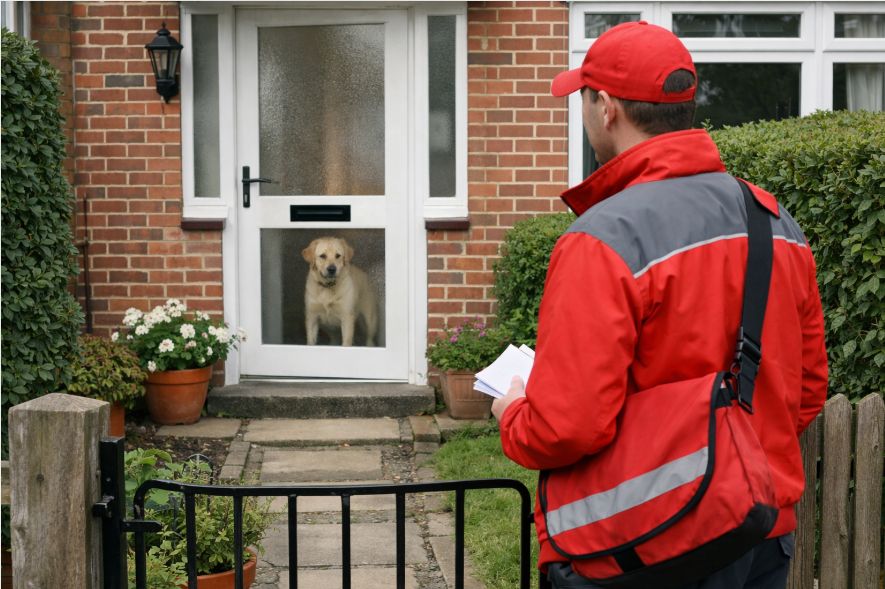
Across the UK, the safety of postal workers has become an increasingly urgent issue. Recent figures show that over 2,197 dog attacks on postal workers were reported in a single financial year equating to roughly 42 incidents every week. This is not a marginal problem; it is a consistent, nationwide concern affecting thousands of households and delivery professionals alike.
For homeowners, particularly those with dogs, this situation introduces a level of responsibility that extends beyond basic pet ownership. An unexpected dog encounter at the front door or letterbox can escalate quickly, even with well-trained animals. In many cases, these incidents occur not because of aggressive dogs, but due to poor communication and lack of visible warning.
This is where the royal mail dog warning sign becomes highly relevant. Royal Mail is actively encouraging households to use clear, instruction-based signage—specifically the message:
“I HAVE A DOG. Please wait whilst I secure my dog before opening the door”.
This blog explains why this wording matters, how it protects both the homeowner and the postie, and what steps can be taken to ensure safe, uninterrupted deliveries.
Why Is the Royal Mail Dog Warning Sign So Important Right Now?
 The Reality Behind the Statistics
The rise in dog-related incidents is not random. It reflects a pattern linked to how deliveries are made. Postal workers frequently approach front doors, open gates, and place letters through narrow slots—actions that can trigger territorial instincts in dogs.
Data confirms that nearly half of all reported incidents happen at the front door, where interaction between the homeowner, dog, and postie is most direct. Another significant portion occurs through the letterbox, often resulting in serious hand injuries.
What This Means for UK Households
From a homeowner’s perspective, the consequences of an incident can be serious. These include delivery suspension, formal warnings, and in some cases, legal proceedings. Even if no injury occurs, a perceived threat can be enough for Royal Mail to reassess delivery safety at a property.
The Role of Clear Communication
A royal mail dog warning sign serves as an early communication tool. It informs the delivery worker before they reach a point of risk. Instead of reacting to a sudden situation, the postie can pause and wait, allowing the homeowner to secure the dog safely.
This simple act of communication significantly reduces the likelihood of an incident.
What Is the Official Royal Mail Dog Warning Sign Wording?
What Should a Royal Mail Dog Warning Sign Say?
Royal Mail has recommended a specific format for dog warning signs that focuses on clarity and instruction rather than fear-based messaging. The advised wording is:
This message is intentionally direct. It does not simply warn of a dog’s presence—it tells the delivery worker exactly what action to take.
Why Does the Exact Wording Matter for Delivery Safety?
The effectiveness of a royal mail dog warning sign depends on how clearly it communicates intent. A vague warning such as “Beware of the Dog” leaves room for interpretation. In contrast, an instruction-based sign removes ambiguity.
When a postie reads a message that asks them to wait, it changes their behaviour. It reduces urgency, prevents sudden movements, and allows time for the homeowner to manage the situation properly.
This approach supports a key principle of safety: prevention through clarity.
UK Dog Attack Statistics on Postal Workers (2024/25 Data)
Understanding the scale of the issue helps explain why Royal Mail has taken a proactive stance on signage.
What the Data Clearly Shows
The majority of incidents occur at predictable points when the door is opened or when mail is delivered through the letterbox. These are routine moments that happen daily across the UK, which means the risk is not isolated but widespread.
This reinforces the importance of proactive measures such as signage, secure entry points, and controlled interaction with delivery workers.
Is a Dog Warning Sign a Legal Requirement in the UK?
 What Does the Dangerous Dogs Act Say?
Under the Dangerous Dogs Act 1991, a dog is considered “dangerously out of control” if it injures someone or causes a person to fear injury. Importantly, this law applies even when the incident occurs on private property.
This means that homeowners cannot assume they are exempt from responsibility simply because the event happens at their front door or inside their boundary.
Can You Be Prosecuted Even on Private Property?
A significant legal clarification came from a High Court ruling in 2020. The court confirmed that dog owners can be held liable for injuries caused through a letterbox—even if they were not present at the time.
This highlights a critical point: responsibility does not depend on intent. It depends on whether reasonable steps were taken to prevent harm.
Does a Royal Mail Dog Warning Sign Provide Legal Protection?
It is important to distinguish between prevention and legal defence.
A royal mail dog warning sign helps demonstrate that the homeowner has taken steps to warn visitors. However, it does not remove liability if an incident occurs. The law still expects dog owners to actively control their pets.
Is “Beware of the Dog” Enough or Should You Use “I Have a Dog”?
Addressing the “Admission of Guilt” Myth
There is a long-standing belief in the UK that displaying a “Beware of the Dog” sign could be used as evidence that the owner knew their dog was dangerous. This idea has caused hesitation among homeowners.
In reality, this is a misunderstanding. The presence of a sign alone does not determine liability. Courts consider the overall circumstances, including whether reasonable precautions were taken.
Why “I Have a Dog” Is the Preferred Option
The key difference lies in the function of the message. A “Beware of the Dog” sign focuses on warning, while an “I HAVE A DOG” sign provides instruction.
This distinction is important because instruction-based signage demonstrates active responsibility. It shows that the homeowner is not only aware of the risk but is also guiding visitors on how to avoid it.
This aligns more closely with modern expectations of duty of care.
Can Royal Mail Stop Deliveries to Your Home?
When and Why Deliveries Are Suspended
Royal Mail operates under a strict safety-first policy. If a postal worker reports a potential risk whether due to a previous incident or perceived danger—deliveries to that address may be suspended.
This decision is not taken lightly, but it is made to protect staff from harm.
How Deliveries Can Be Reinstated
Restoring delivery service often requires evidence that the risk has been addressed. This may include changes such as securing gates, modifying access points, and installing clear signage.
In many cases, the presence of a properly placed royal mail dog warning sign is a key factor in demonstrating that the property is now safe.
Where Should You Place a Royal Mail Dog Warning Sign?
 Visibility Is the Most Important Factor
For a sign to be effective, it must be seen before the delivery worker reaches the point of interaction. This means placing it at eye level and in clear view of the entrance.
Recommended Placement Strategy
The most effective locations include:
- The front door, where interaction occurs
- The gate, if the property has a front boundary
- A window facing the entrance path
The “Postie’s Eye View”
Thinking from the perspective of a postal worker can help determine the best placement. The sign should be visible from a distance, ideally at around 1.5 metres height, and should not be obstructed by plants, decorations, or poor lighting.
Letterbox Safety: How to Prevent Injuries to Postal Workers
Why Letterboxes Are a Hidden Risk
Letterbox injuries account for a significant portion of reported incidents. Dogs can react quickly to movement or noise, and the confined space increases the severity of bites.
Effective Safety Solutions for UK Homes
To reduce this risk, homeowners can consider physical modifications that limit access to the letterbox area. Internal cages and external mailboxes are particularly effective because they create a barrier between the dog and the delivery worker.
When combined with a royal mail dog warning sign, these measures provide both visual and physical protection.
Top Tips to Protect Your Postie and Your Deliveries
Practical Steps for Everyday Safety
The most effective approach to preventing incidents is consistency. Homeowners should develop a routine that ensures the dog is secured before any interaction with a delivery worker.
Placing the dog in another room before opening the door is one of the simplest and most reliable methods. Over time, this becomes a habit that significantly reduces risk.
Training also plays a role. Dogs that are accustomed to door activity are less likely to react unpredictably. However, even well-trained dogs should not be relied upon without proper precautions.
Who Is Responsible for Dog Warning Signs: Landlord or Tenant?
 Understanding Legal Responsibility
Under the Occupiers’ Liability Act 1957, the person in control of the property—typically the occupant—is responsible for ensuring that visitors are reasonably safe.
How This Applies to Rental Properties
In most cases, tenants who own dogs are responsible for installing warning signs and managing risk. Landlords may have a role in approving modifications, but the day-to-day responsibility lies with the occupant.
Considerations for Businesses
Properties used for commercial purposes, especially those with dogs on-site, must take additional care. Clear signage, controlled access, and adherence to safety standards are essential.
Expert Advice on Preventing Dog Attacks on Postal Workers
Industry experts consistently highlight the importance of awareness and prevention.
— Lizz Lloyd, Health & Safety Director at Royal Mail
— Dave Joyce, CWU National Health and Safety Officer
These statements reinforce a clear message: prevention is a shared responsibility.
Real-Life Scenario: How a Simple Sign Prevented an Incident
A homeowner in Manchester installed a royal mail dog warning sign after noticing their dog becoming increasingly territorial during deliveries.
One afternoon, a postal worker approached the property and saw the sign before reaching the door. Instead of proceeding, they waited at a safe distance. The homeowner secured the dog and then completed the delivery safely.
This small adjustment prevented a potentially serious incident and ensured that deliveries continued without interruption.
Conclusion
The increase in dog-related incidents involving postal workers highlights a clear and ongoing need for preventative action. A royal mail dog warning sign is not just a recommendation it is a practical tool that supports safer communication, reduces risk, and demonstrates responsible ownership.
While it does not replace legal obligations, it plays a crucial role in preventing misunderstandings and avoiding incidents. For UK homeowners, taking this simple step can help protect both their deliveries and the people who make them possible.
FAQs About Royal Mail Dog Warning Signs
Can Royal Mail suspend deliveries permanently due to a dog?
Yes, if the risk is not addressed, delivery suspension can continue indefinitely.
Is an “I HAVE A DOG” sign better than other warning signs?
Yes, because it provides a clear instruction rather than a general warning.
Do small dogs still require warning signs?
Yes, any dog can pose a risk, especially during unexpected interactions.
Can I place the sign inside my porch?
It is better to place it where it is visible before entry, not after.
Are digital or printed signs acceptable?
Yes, as long as they are clear, durable, and easy to read.
What happens after a dog-related incident is reported?
Royal Mail may conduct a risk assessment and suspend deliveries.
Can multiple warning signs improve safety?
Yes, especially for larger properties or multiple entry points.